When you think of motorcycles what do you envision? Does your mind’s eye create an image that looks like one of these?
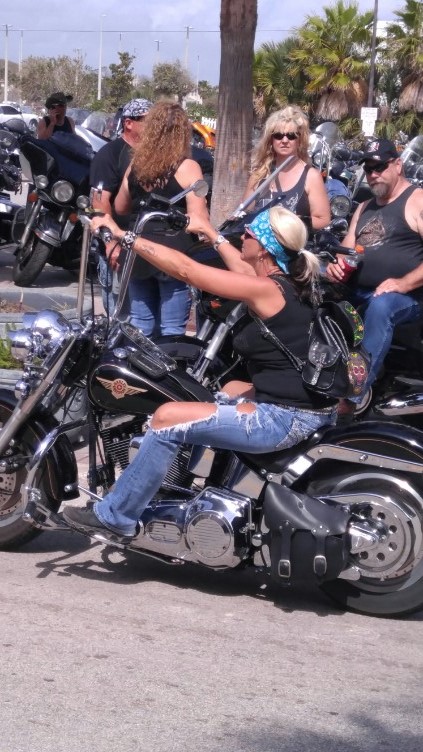
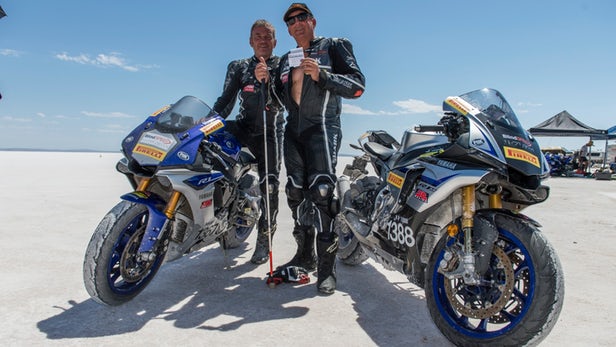
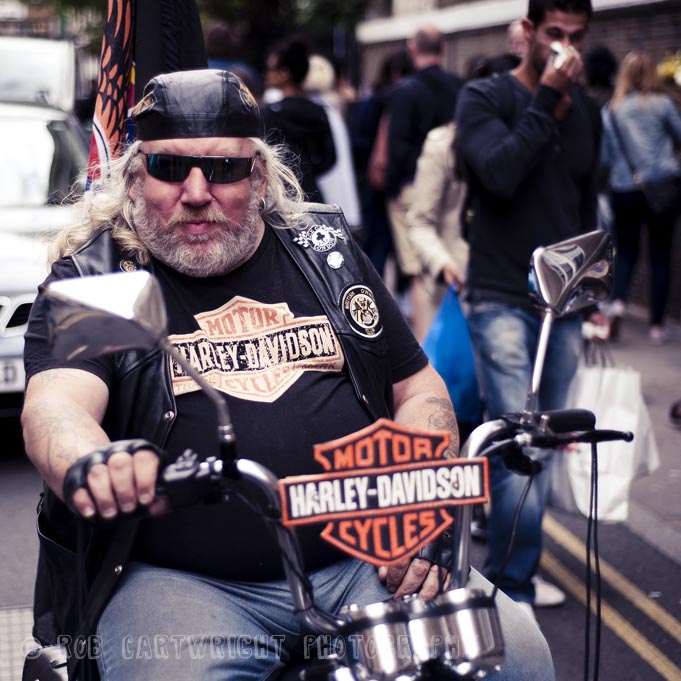
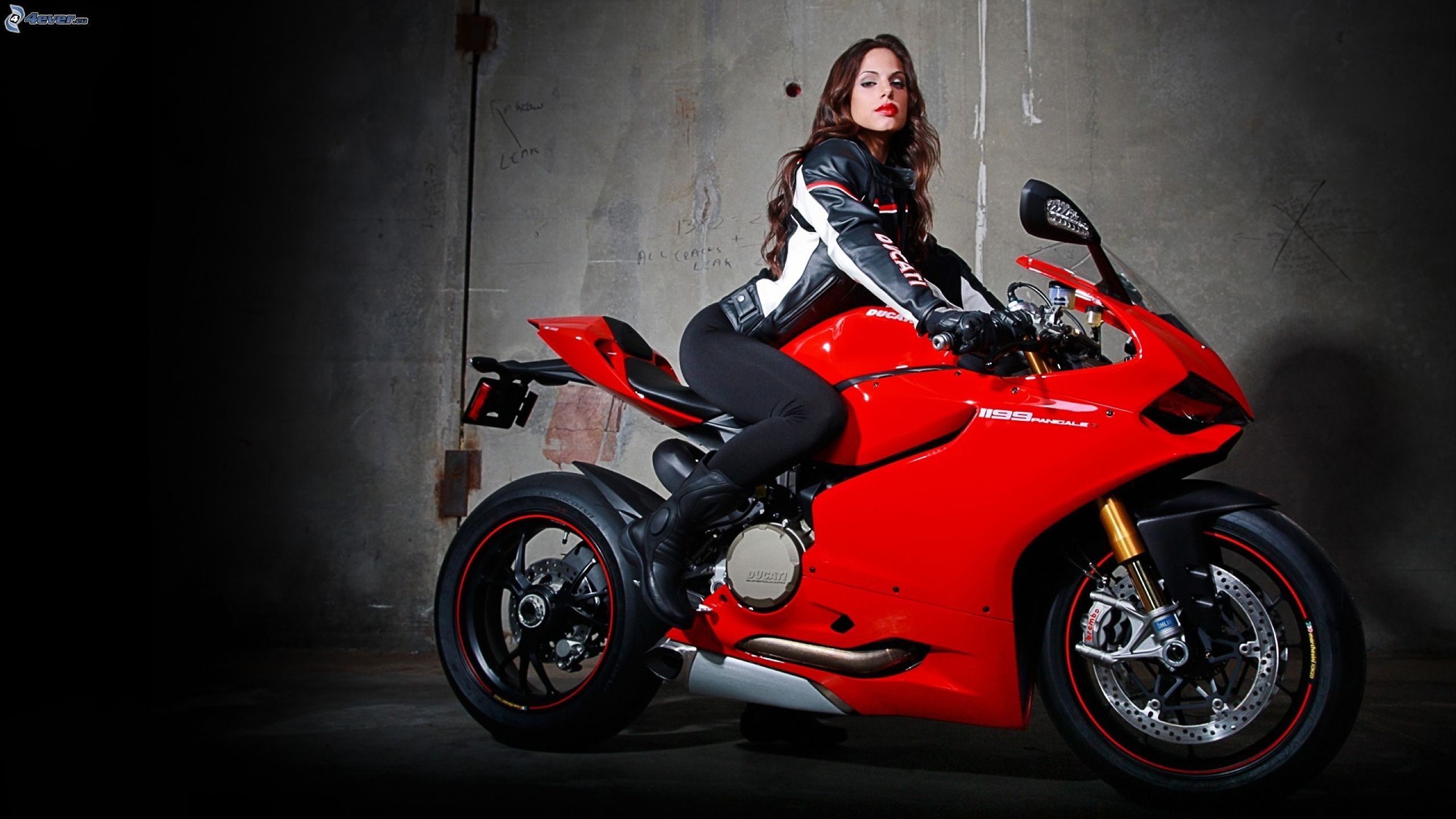
How about either of these?
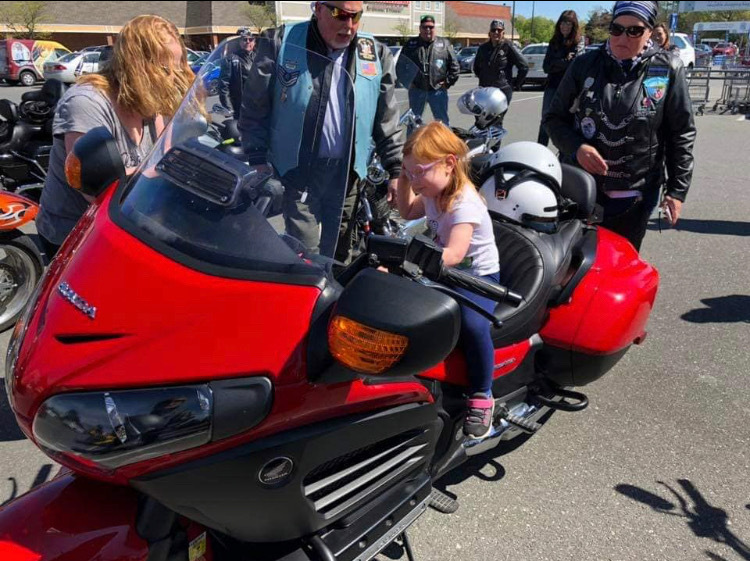
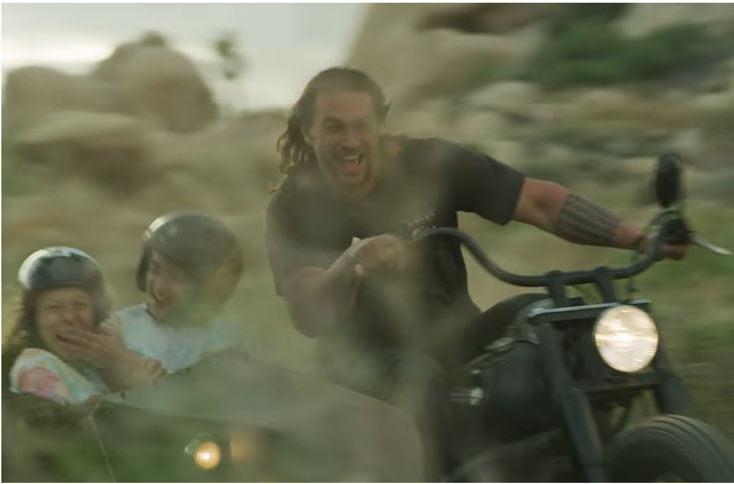

I work full-time at Siena College, a private, Franciscan college. When not working, I enjoy hanging out with friends listening to music (especially country) and chatting, board games, reading, binge watching Netflix (who doesn’t?!?), and cooking. I also love going to concerts, plays (especially musicals) and other unique events. When the weather permits, I like hiking, kayaking and camping. I also volunteer at and through my church. I have served on the Church Council, including as President, and on the Stewardship Team.
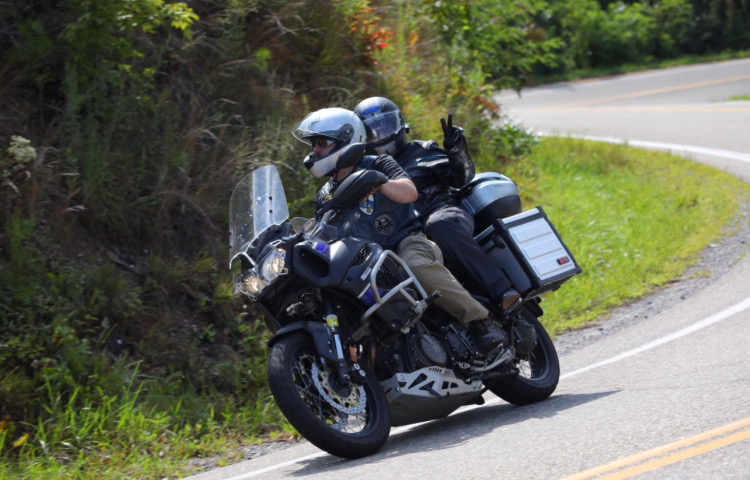
When I’m not doing one of those many hobbies and activities, I like motorcycle riding. I don’t actually drive (if you saw how I park, you’d thank me!), but am a frequent passenger and “Lady” of a man who is in a motorcycle club. However, if I did “ride”, I’d be among a growing number of college educated women who are becoming riders. According to the Motorcycle Industry Council, the number of female motorcycle owners has nearly doubled in the past decade from about 1 in every 10 in 2009 to 19% today. There are over 13 million riders in the U.S. today; most employed (71%) middle-aged (50%) men (81%) with a median income slightly above the national average. Doesn’t sound so deviant does it? However, most often bikers are met with trepidation. Why?
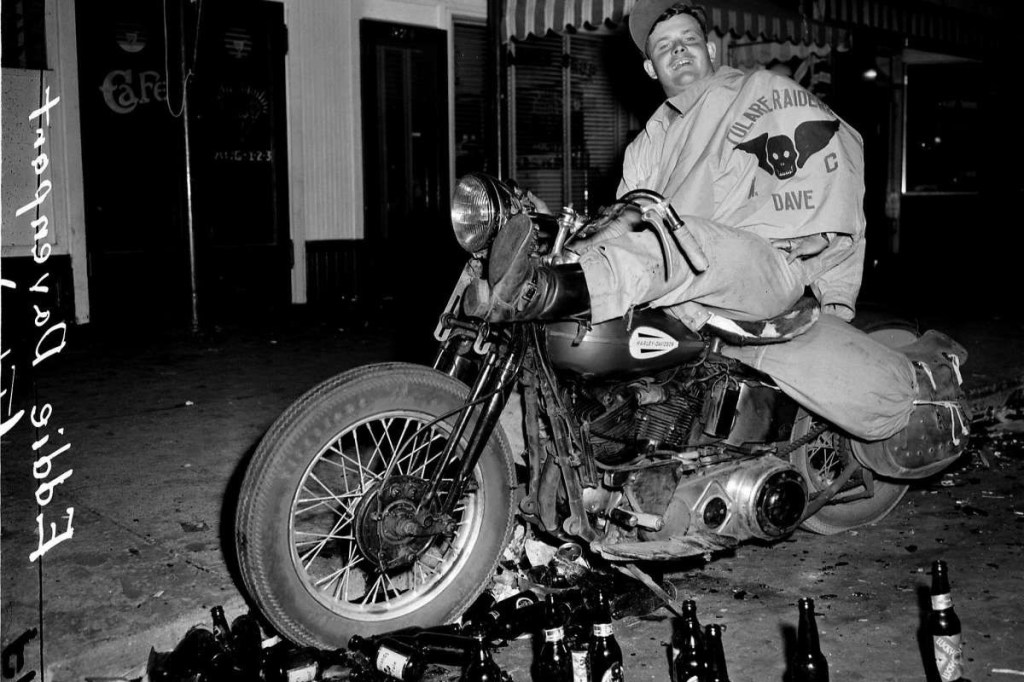
Most people track the negative image of bikers back to the Hollister Riot of 1947. This wasn’t really a riot, but a few bikers caused some minor damage, and the press reported it as a riot. Much like the events that would occur nearly twenty years later when the Mods and Rockers were reported to have ‘beaten up the town’ of Clacton, England, the media “over-reported” what had occurred. (Cohen, p.26) The “outlaw biker” image grew from there and was supported by the rivalry between the Hells Angels and the Outlaws; two motorcycle clubs. Throughout the 50’s and 60’s the motorcycle culture grew and the sub-culture really took hold. The image of bikers as criminals was cemented when the Racketeer Influence and Corrupt Organizations Act (RICO) was enacted in 1970 and the federal government charged Sonny Barger and other members of the Hells Angels Motorcycle Club with gun and drug charges using this act.
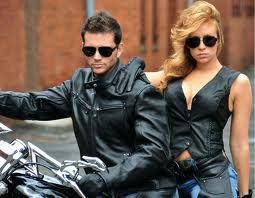
There are other features related to motorcycling that add to the deviant image. There is latent (or maybe not so) sexuality of the vibrating machine between one’s legs. The gear is oftentimes leather, which is for safety purposes, but is seen as a sexy or dangerous. Motorcyclists, and especially clubs, have their own language. Terms such as “old lady” and “RUBs” (rich urban bikers) define roles and guide group members on how to interact. Members typically wear matching vests (their cut) and many have tattoos. By having a certain appearance and speaking in their own language, motorcyclists simultaneously bond with each other while setting up barriers for those outside the group. Much like the musicians Howard S. Becker studies, motorcyclists “way of life are sufficiently bizarre and unconventional for them to be labeled as outsiders. (Becker, p. 79)
Similar to other deviant groups, the biker goes through stages of “becoming”(Schouten & McAlexander, p. 55). Much like, but more intentional than the “natural cycle of passing” (Goffman, p.79) defined by Goffman, the stages were well defined in a 1995 article from Journal of Consumer Research. These stages are experimentation with the biker identity, identification and conformity, and mastery and internalization (Schouten & McAlexander, p. 55).
As Schouten & McAlexander point out, “the biker motto, “Live to ride, ride to live,” suggests that motorcycling is a total lifestyle for the enthusiast” (Schouten & McAlexander, p. 50). They contend, however, that this isn’t true for the majority of bikers. For most, they argue that it is a “temporary self-transformation” (Schouten & McAlexander, p. 50). Although Schouten & McAlexander were specifically researching Harley Davidson owners, a subculture within the subculture, specifically one of consumption, this “sanctuary” (Schouten & McAlexander, p. 50) they describe as a spiritual experience is a common one for bikers. If you watch the video below, in which actor and biker Jason Momoa talks about his experiences as a biker and how they have personally impacted his life and relationships, it might be hard to argue that participating in motorcycling isn’t spiritual.
Today, in general, it is more acceptable to be a biker. Television shows such as American Chopper, Sons of Anarchy and Ride with Norman Reedus, have popularized and de-stigmatized bikers. In general, motorcycle clubs are not dangerous, but there still are fringe elements within the motorcycling community. There are dangerous “gangs” and clubs that have been labeled by the FBI as outlaw motorcycle gangs (OMGs). These include the Hells Angels, the Pagans, the Outlaws, and the Bandidos which are known as the “Big Four”. Clubs such as these perpetuate the negative image that bikers are criminals, or at the very least, rule breakers.
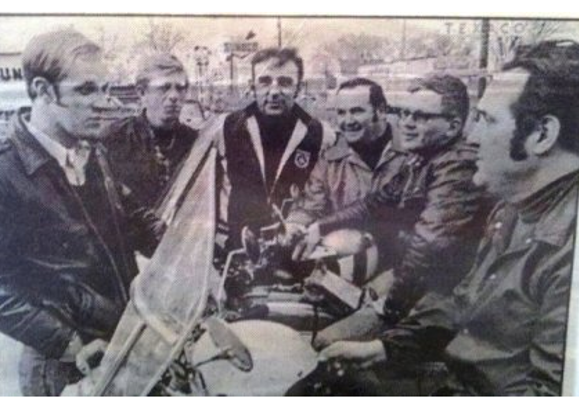
Mike Hall, Doug Minor, Chuck Shuman, ed Galland , Chuck Gessner, Joel Rudom (not in picture – Bill Robinson, Wayne Lebree)
The club my husband belongs to is actually a law enforcement club called Blue Knights. The Blue Knights® International Law Enforcement Motorcycle Club was founded in Bangor, Maine in 1974 by a small group of law enforcement officers.
This is a well-organized group with qualifications to be a member, dues, by-laws and elections. To become a member, one must:
- Be an active full or part time law enforcement officer with powers of arrest
- Be employed by a governmental agency and receive monetary compensation, or be a retired or disabled former law enforcement officer
- Possess a valid license to operate a motorcycle
- Own a motorcycle or plan to purchase one within six months
They even have their own official ballad, which can be heard in the recruitment video below.
Lyrics written by Crystal Swygert
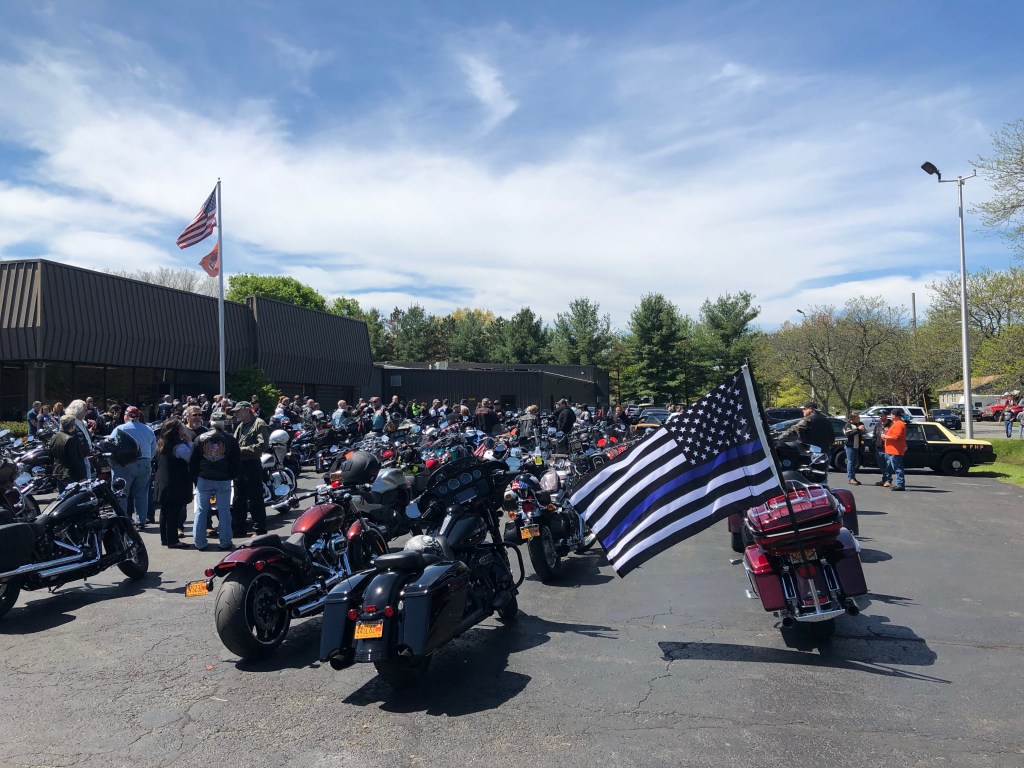
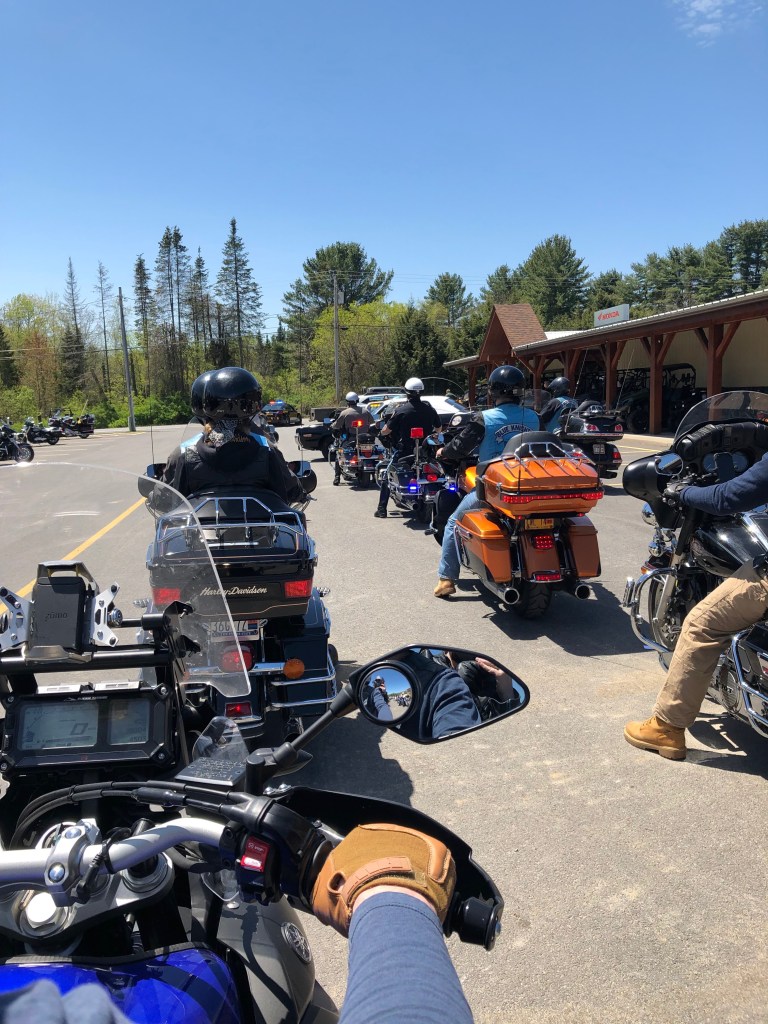
The Blue Knights routinely participate in charity rides (as do some OMGs) and are truly a brother/sisterhood (another feature of OMGs and gangs in general). Like Becker’s dance musicians, their club is “stable and long-lasting” (Becker, p. 79). As law enforcement motorcycle club members, these men and women are simultaneously the rule enforcers and rule breakers; deviant to most of society because of their participation in motorcycling, but also deviant to many of those who engage in the motorcycle subculture. Below are some photographs from a recent memorial ride for fallen officers. While the image of nearly 100 motorcycles and lots of leather clad people might seem intimidating, the truth on this day was that only criminals should have been nervous.
There is one group in particular that represents this dichotomy between scary biker and Good Samaritan. Bikers Against Bullies (BACA) is a nonprofit organization started by John Paul “Chief” Lilly a registered recreational therapist, licensed clinical social worker and biker. As you can see from the image below, these bikers sport non-conventional facial hair styles, leather and multiple tattoos. Probably not the people you would think would be providing support for children who have experienced abuse.
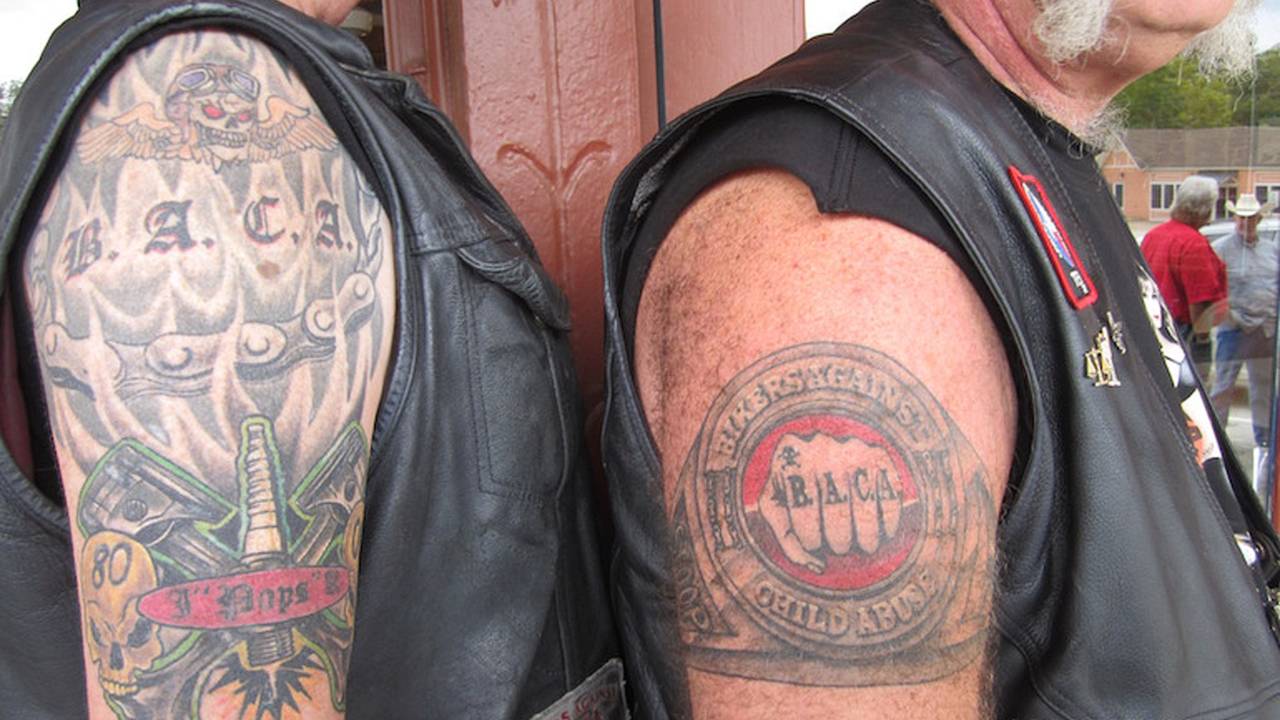
BACA members participate in four different levels of intervention based on the needs of a child and their family. These include:
- Level 1, “the initial intervention” (Ray, D. C., Lilly, J. P., Gallina, N., MacIan, P., & Wilson, B., p. 125) where the BACA riders meet the child at a location selected by the parent or guardian. This is the time when the child is given gifts such as a vest and stuffed toy. They are also made aware that BACA is there for them.
- Level 2 is where BACA will “provide a presence at the child’s home” (Ray, D. C., Lilly, J. P., Gallina, N., MacIan, P., & Wilson, B., p. 125), and provide an escort if needed.
- Level 3 involves the Chapter President or Vice President writing a letter to the abuser/harasser that is “approved through the court system” (Ray, D. C., Lilly, J. P., Gallina, N., MacIan, P., & Wilson, B., p. 125)notifying them that BACA “is prepared to continue its D.C. Evaluation and Program Planning presence as an obstacle to further abuse”.
- Level 4 is a Neighborhood Awareness where the BACA membership ride “in the general location of where the alleged perpetrator lives” (Ray, D. C., Lilly, J. P., Gallina, N., MacIan, P., & Wilson, B., p. 126) and distribute information to adults and children in the neighborhood.
In addition to these four levels of intervention, BACA members will be a presence in court and work with the judicial system and law enforcement. Research into the effectiveness of this group has shown support for the belief that “children demonstrate sustained emotional and behavioral improvements over time, given a meaningful and safe relational experience” (Ray, D. C., Lilly, J. P., Gallina, N., MacIan, P., & Wilson, B., p. 129) and that “the intended goal that children experiencing current or past sexual or physical abuse may benefit from BACA intervention strategies” (Ray, D. C., Lilly, J. P., Gallina, N., MacIan, P., & Wilson, B., p. 129).
While there are individual and group motorcyclists that would probably be considered deviant, this is not simply due to their participation in motorcycling. Those that truly qualify nowadays participate in other behaviors such as criminal activity and socially discouraged or outright unacceptable behaviors such as obtaining numerous tattoos or engaging in what would be considered promiscuous or indecent sexual acts. Today’s “new biker” (Thompson, p. 89), as well as more traditional and conventional bikers who do not engage in these deviant activities, is bucking the old labels. Not only are they not disruptive forces in communities, they are often valuable sources for support within communities. Someday in the future when I tell people of my participation in motorcycle riding and a motorcycle club, they won’t raise their eyebrows or make exclamations of surprise.
References:
Barker, T. & Human, K. M., 2009. “Crimes of the Big Four motorcycle gangs,” Journal of Criminal Justice, Elsevier, vol. 37 (2), pages 174-179, March.
Becker, H. S. Outsiders: Studies in the Sociology of Deviance. Free Press, 1997.
Cohen, S. “Deviance and Moral Panics.” Folk Devils and Moral Panics, by Stanley Cohen, Routledge, 2011.
Goffman, E. (1963). Stigma; notes on the management of spoiled identity. Prentice-Hall.
Guzman, G. G. “Household Income: 2017 American Community Survey Briefs”. U.S. Census, September 2018.
Law, K. “10 Best TV Shows For Motorcycle Lovers (And 10 No One Should Watch)”. Hot Cars, 14 November, 2018.
Lieback, R. “MIC Report: Women Motorcycle Ownership Reaches 19% (1 in 5 Owners are Female)”. Ultimate Motorcycling, 30 November, 2018.
Lieback, R. “Motorcycle Statistics in America: Demographics Change for 2018”. Ultimate Motorcycling, 7 February, 2019.
Ling, L. “Riding with an outlaw motorcycle club”, CNN, “This is Life” Series, 6 October, 2015.
McCrystal, H. “The history of motorcycle culture”. Motor Bike Times, 12 August, 2014.
Ray, D. C., Lilly, J. P., Gallina, N., MacIan, P., & Wilson, B. (2017). Evaluation of Bikers Against Child Abuse (BACA) program: A community intervention for child abuse victims. Evaluation and Program Planning, 124.
Schouten, J. W. & McAlexander, J. H. (1995). Subcultures of Consumption: An Ethnography of the New Bikers. Journal of Consumer Research, 22(1), 43.
Thompson, W. E. (2009). Pseudo-deviance and the “new biker” subculture: Hogs, blogs, leathers, and lattes. Deviant Behavior, 30(1), 89–114.

 Colleen's Blog