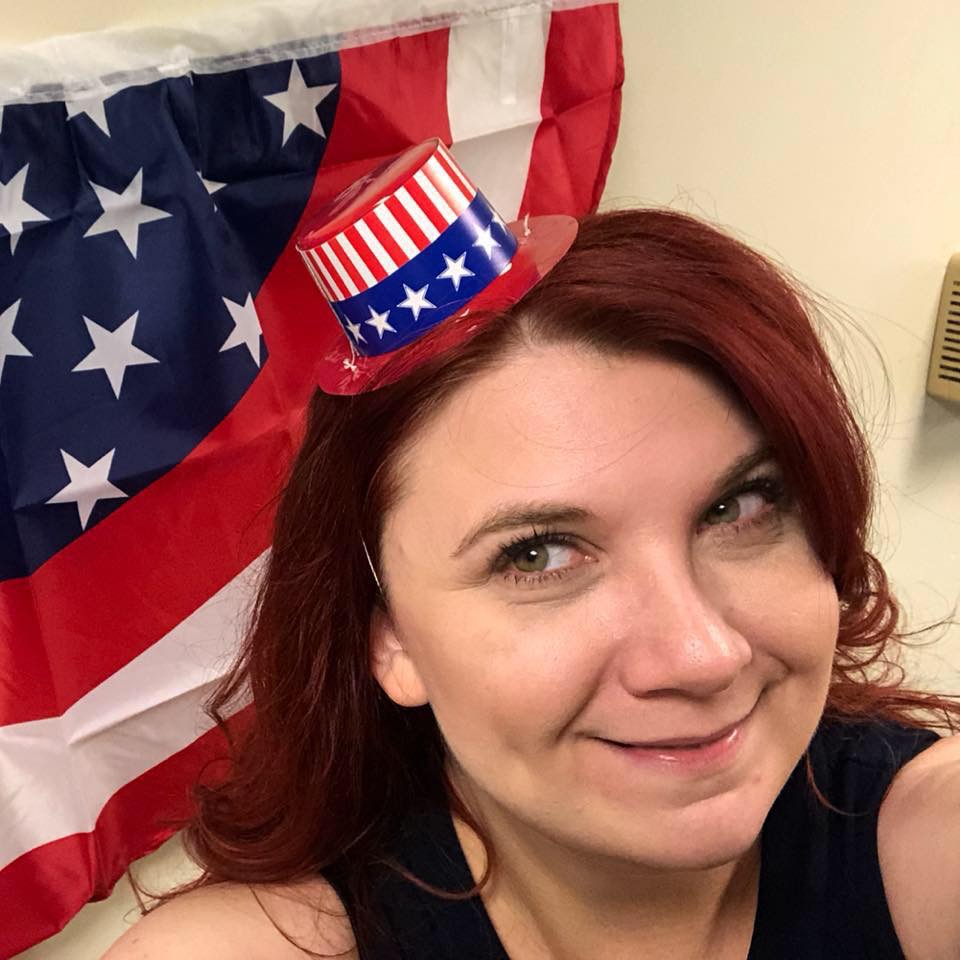
Hello! I am Colleen Kromrey. I am a senior sociology major. I am originally from Amsterdam, NY a small city about 30 miles from Loudonville. Despite a lot of negative perceptions people have about my hometown, I had a really good experience growing up there and have a lot of pride in Amsterdam. I grew up on “Polack Hill”, so there were a lot of Polish influences growing up, but there were other ethnicities in the neighborhood as well. There are strong groups of Italian, Irish, and Hispanic (about one-quarter of the population) throughout the city. I know that I am Irish and Polish, but I’m not sure what else because my biological father was adopted.

Currently, I work full-time at the Siena College Research Institute as the Coordinating Supervisor. When not working, I enjoy hanging out with friends listening to music (especially country) and chatting, board games, reading, binge watching Netflix (who doesn’t?!?), and cooking. I also love going to concerts, plays and other unique events. When the weather permits, I like hiking, kayaking and camping. I also volunteer at and through my church. I have served on the Council, including as President, and on the Stewardship Team.
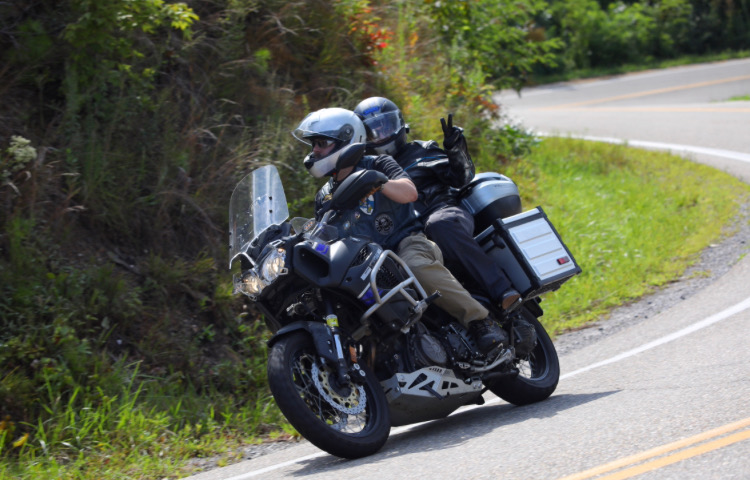
One other hobby that I enjoy participating in that can be viewed as “deviant” is motorcycle riding. I don’t actually drive (if you saw how I park, you’d thank me!), but am a frequent passenger and “Lady” of a man who is in a motorcycle club. However, if I did “ride”, I’d be among a growing number of college educated women who are becoming riders. According to the Motorcycle Industry Council, the number of female motorcycle owners has nearly doubled in the past decade from about 1 in every 10 in 2009 to 19% today. There are over 13 million riders in the U.S. today; most employed (71%) middle-aged (50%) men (81%) with a median income slightly above the national average. Doesn’t sound so deviant does it? However, most often bikers are met with trepidation. Why?
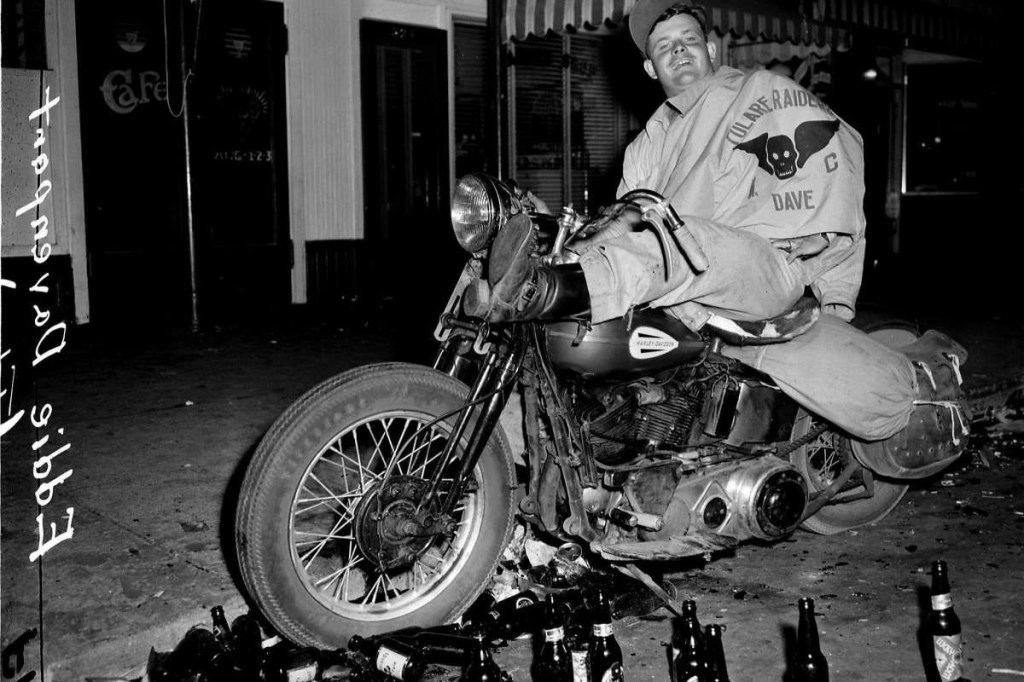
Most people track the negative image of bikers back to the Hollister Riot of 1947. This wasn’t really a riot, but a few bikers caused some minor damage, and the press reported it as a riot. Much like the events that would occur nearly twenty years later when the Mods and Rockers were reported to have ‘beaten up the town’ of Clacton, England, the media “over-reported” what had occurred. (Cohen, p.26)The “outlaw biker” image grew from there and was supported by the rivalry between the Hells Angels and the Outlaws; two motorcycle clubs. Throughout the 50’s and 60’s the motorcycle culture grew and the sub-culture really took hold. The image of bikers as criminals was cemented when the Racketeer Influence and Corrupt Organizations Act (RICO) was enacted in 1970 and the federal government charged Sonny Barger and other members of the Hells Angels Motorcycle Club with gun and drug charges using this act.
Photo: Eddie Davenport of Tulare on a motorcycle, at 526 San Benito St., on July 6, 1947.P Courtesy: Barney Peterson, SFC
There are other features related to motorcycling that add to the deviant image. There is latent (or maybe not so) sexuality of the vibrating machine between one’s legs. The gear is oftentimes leather, which is for safety purposes, but is seen as a sexy or dangerous. Motorcyclists, and especially clubs, have their own language. Terms such as “old lady” and “RUBs” (rich urban bikers) define roles and guide group members on how to interact. Members typically wear matching vests (their cut) and many have tattoos. By having a certain appearance and speaking in their own language, motorcyclists simultaneously bond with each other while setting up barriers for those outside the group. Much like the musicians Howard S. Becker studies, motorcyclists “way of life are sufficiently bizarre and unconventional for them to be labeled as outsiders. (Becker, p. 79)
Today, in general, it is more acceptable to be a biker. Television shows such as American Chopper, Sons of Anarchy and Ride with Norman Reedus, have popularized and destigmatized bikers. In general, motorcycle clubs are not dangerous, but there still are fringe elements within the motorcycling community. There are dangerous “gangs” and clubs that have been labeled by the FBI as outlaw motorcycle gangs (OMGs). These include the Hells Angels, the Pagans, the Outlaws, and the Bandidos which are known as the “Big Four”.
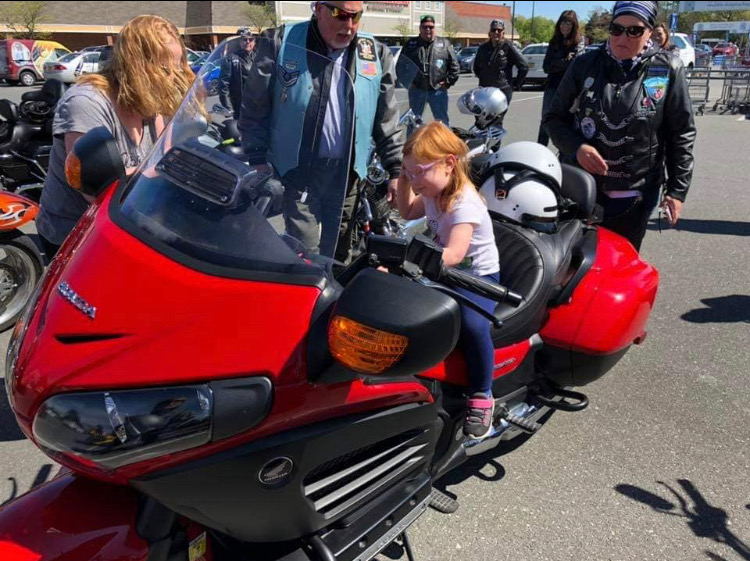
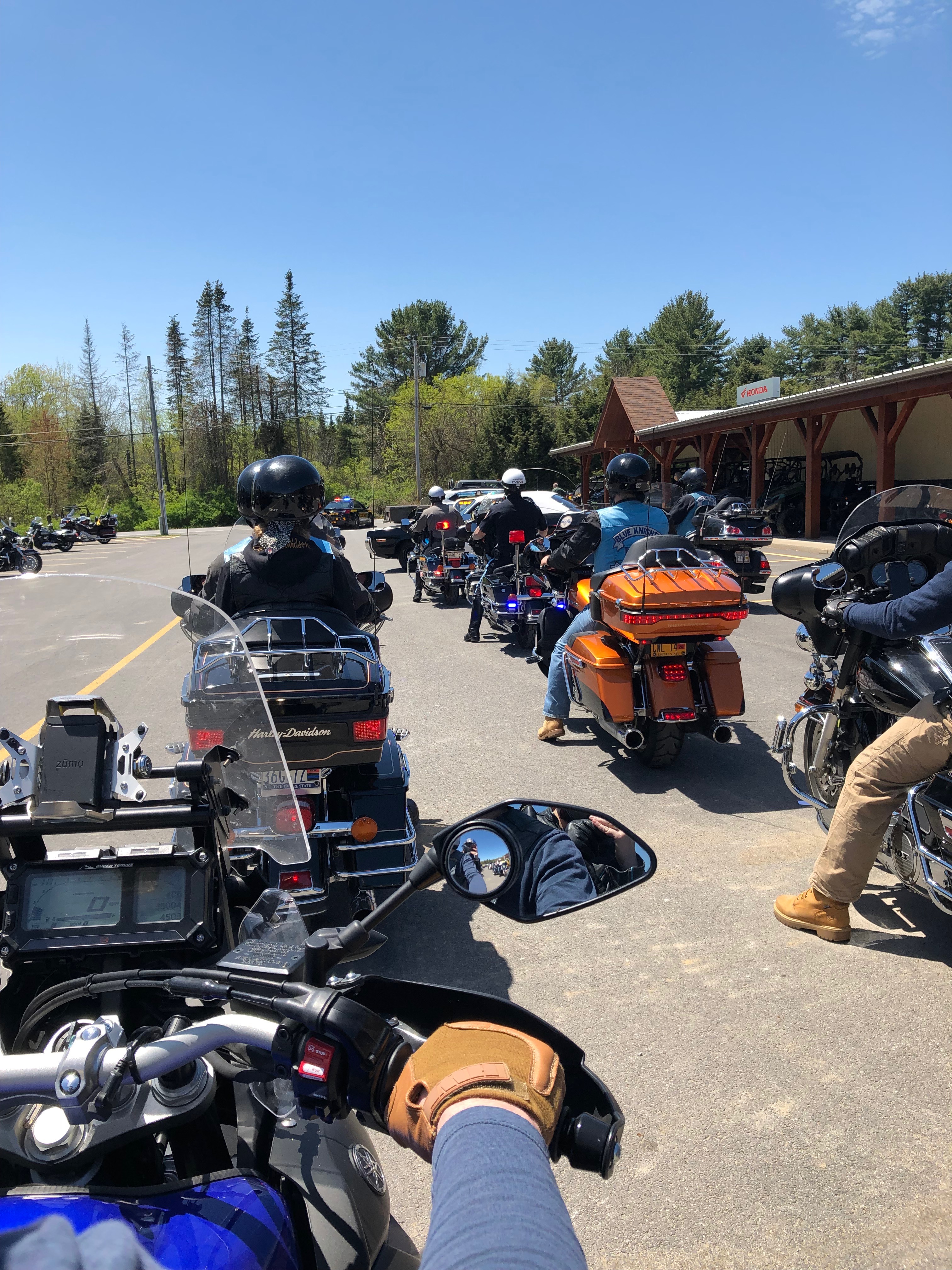
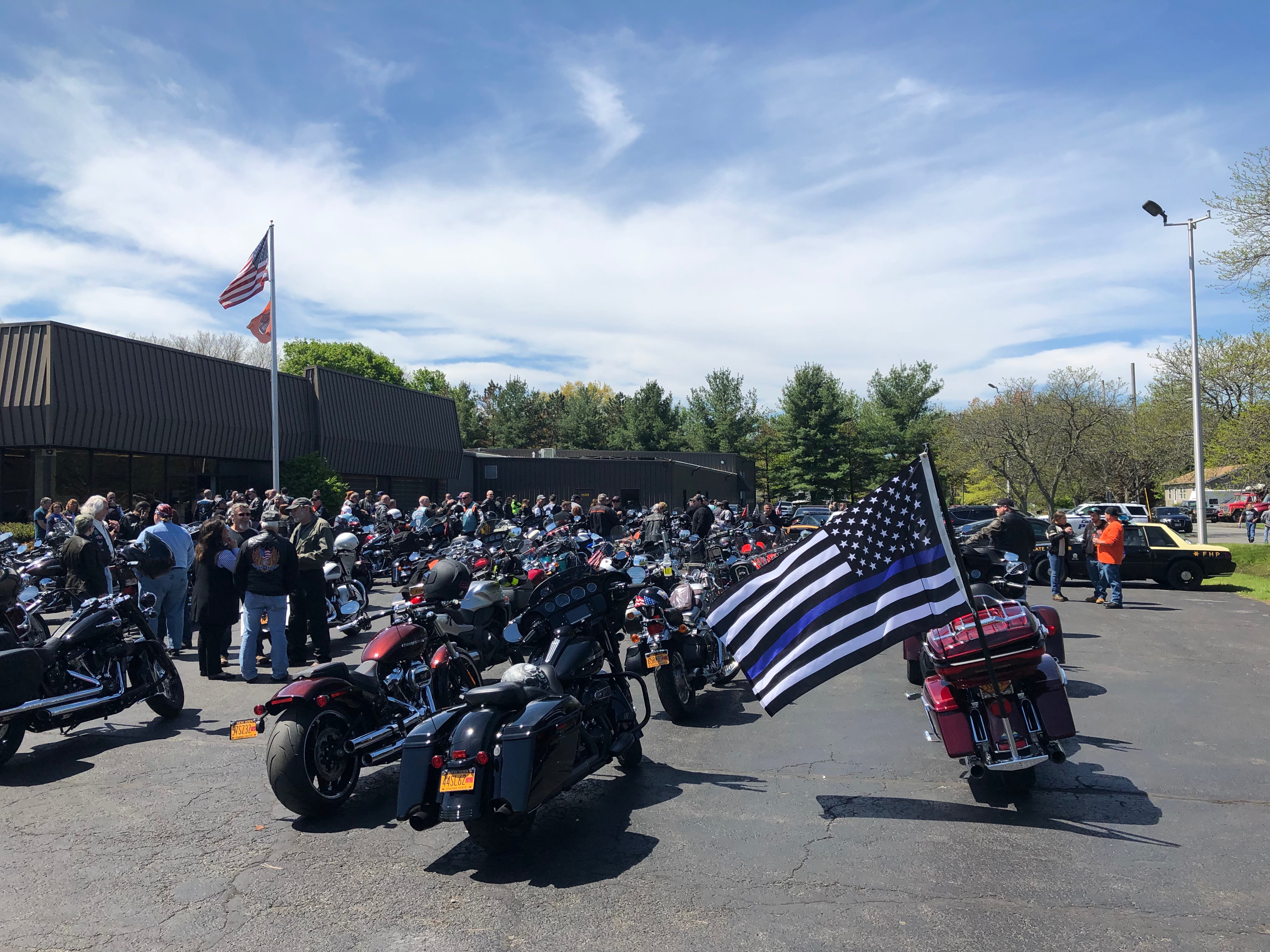
The club my husband belongs to is actually a law enforcement club called Blue Knights. They routinely participate in charity rides (as do OMGs) and are truly a brother/sisterhood (another feature of OMGs and gangs in general). Like Becker’s dance musicians, their club is “stable and long-lasting”. (Becker, p. 79) As law enforcement motorcycle club members, these men and women are simultaneously the rule enforcers and rule breakers; deviant to most of society, but also deviant to those who engage in the motorcycle subculture. Below are some photographs from a recent memorial ride for fallen officers. As you can see they are quite scary and deviant!
References:
Barker, Thomas & Human, Kelly M., 2009. “Crimes of the Big Four motorcycle gangs,” Journal of Criminal Justice, Elsevier, vol. 37(2), pages 174-179, March.
Becker, Howard Saul. Outsiders: Studies in the Sociology of Deviance. Free Press, 1997.
Carpenter, Susan. “A veteran biker has advice on becoming one”, L.A. Times, 21 November, 2017, https://www.latimes.com/business/autos/la-hyw-handbook21nov21-story.html.
City-data. “Amsterdam, New York”. http://www.city-data.com/city/Amsterdam-New-York.html
Cohen, Stanley. “Deviance and Moral Panics.” Folk Devils and Moral Panics, by Stanley Cohen, Routledge, 2011.
Guzman, Gloria G. “Household Income: 2017 American Community Survey Briefs”. U.S. Census, September 2018, https://www.census.gov/content/dam/Census/library/publications/2018/acs/acsbr17-01.pdf.
Law, Kristy. “10 Best TV Shows For Motorcycle Lovers (And 10 No One Should Watch)”. Hot Cars, 14 November, 2018, https://www.hotcars.com/best-tv-shows-for-motorcycle-lovers-no-one-should-watch/.
Lieback, Ron. “MIC Report: Women Motorcycle Ownership Reaches 19% (1 in 5 Owners are Female)”. Ultimate Motorcycling, 30 November, 2018, https://ultimatemotorcycling.com/2018/11/30/women-motorcycle-ownership-reaches-19-percent-one-in-five-owners-female/.
Lieback, Ron. “Motorcycle Statistics in America: Demographics Change for 2018”. Ultimate Motorcycling, 7 February, 2019, https://ultimatemotorcycling.com/2019/02/07/motorcycle-statistics-in-america-demographics-change-for-2018/.
Ling, Lisa. “Riding with an outlaw motorcycle club”, CNN, “This is Life” Series, 6 October, 2015, https://www.youtube.com/watch?v=J7PN7JmXvic .
McCrystal, Hayley. “The history of motorcycle culture”. Motor Bike Times, 12 August, 2014, http://www.motorbiketimes.com/feature/the-history-of-motorcycle-culture-$21384141.htm.

 Colleen's Blog